
Cooper County Criminal Court Records
A criminal court record is the court file kept after a prosecutor files charges. In Cooper County, the Circuit Court office handles criminal filings, along with traffic, civil, small claims, domestic relations, adult abuse, child protection orders, juvenile, and probate matters. The criminal file may include the complaint or information, charge counts, arraignment, attorney entries, bond conditions, pretrial motions, hearing settings, trial or plea entries, disposition, sentence, probation terms, restitution, fines, and costs.
Cooper County is in the 18th Judicial Circuit. Felony prosecutions, misdemeanor cases, preliminary matters, and many traffic offenses are handled within the circuit-court structure. Municipal citations may start in a municipal division, and Windsor Place's official municipal court page shows that some municipal payments are mailed to the Cooper County Circuit Clerk. Federal criminal prosecutions are separate and belong to the U.S. District Court for the Western District of Missouri, not the Cooper County court file.
Search Cooper County Criminal Case Files
Use Missouri Case.net for public Cooper County criminal court records. Search by case number when available. If the case number is unknown, search by defendant name and narrow to Cooper County or the 18th Judicial Circuit. The local Cooper County Circuit Court page points users to Missouri Courts for case information, while the Circuit Clerk remains the local channel for certified copies, older records, and payment questions.
- Open Case.net and choose case-number or litigant-name search.
- Enter the defendant's name or the exact criminal case number.
- Filter by Cooper County, the 18th Judicial Circuit, criminal case type, or filing date when those options are available.
- Open the matching case and review charges, docket entries, hearing dates, plea, disposition, sentence, and financial entries.
- Call the Cooper County Circuit Clerk for certified copies, unavailable documents, or older files that are not online.
Statewide criminal-history checks are a separate access channel. The Missouri State Highway Patrol criminal record check page describes open and closed Missouri criminal-history information. That record-check system is not the court docket, but it can be relevant when a person needs a statewide criminal-history product instead of a Cooper County court case file.
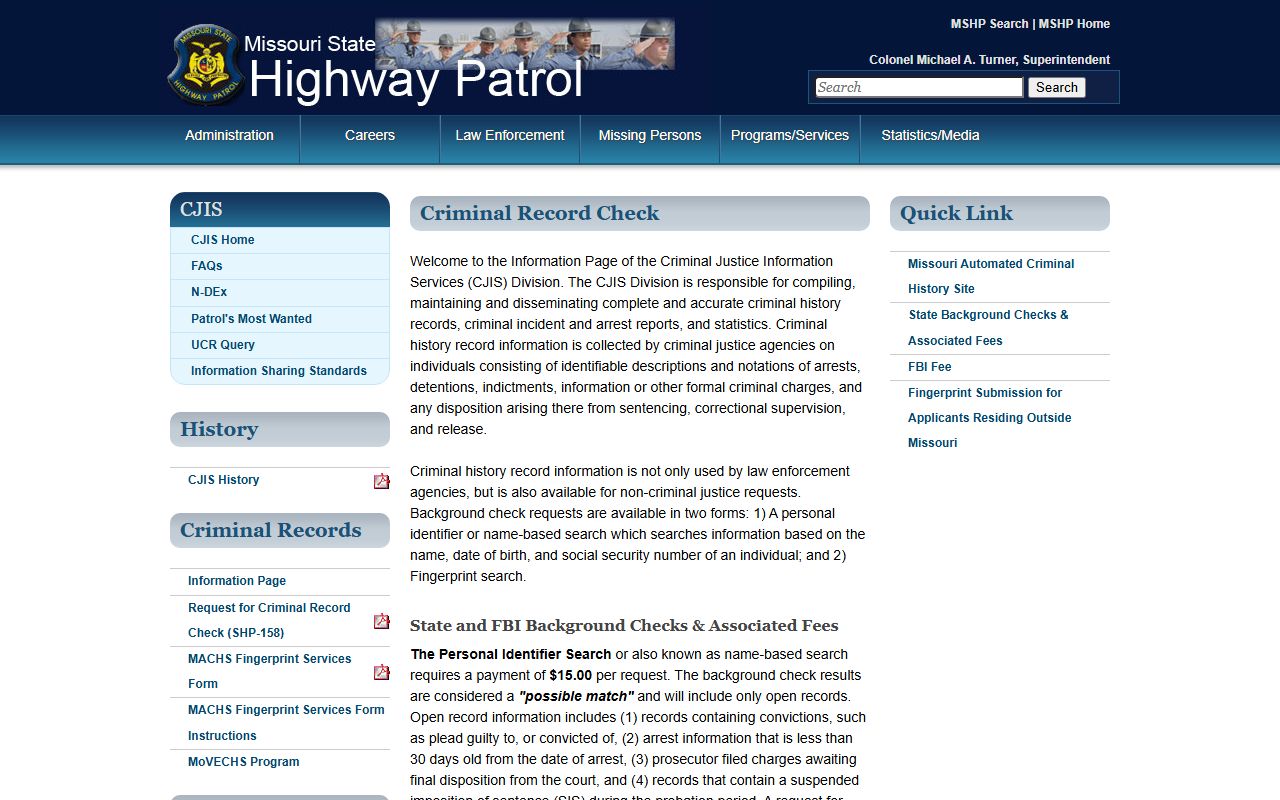
Use the court case file for filings, pleas, dispositions, and sentencing. Use the Highway Patrol record-check channel for statewide criminal-history requests.
Cooper County Criminal Case Flow
A Cooper County criminal court record changes as the case moves through each stage. Arrest or investigation records may begin with law enforcement, but the court record begins when charges are filed with the court. The Cooper County Prosecuting Attorney decides and files state criminal charges after law enforcement submits reports. The Circuit Clerk keeps the court file once it is opened.
Case flow: Charges Filed › Arraignment › Pretrial / Motions › Plea or Trial › Disposition › Sentencing
| Stage | What Happens |
|---|---|
| Charges Filed | The prosecutor files a complaint, information, or other charging document, and the case opens in court. |
| Arraignment | The defendant is advised of the charge and enters or prepares to enter a plea. |
| Pretrial / Motions | Attorneys file motions, discovery issues are handled, hearings are set, and bond or scheduling matters may appear. |
| Plea or Trial | The case resolves by plea, bench trial, jury trial, dismissal, or another court-approved outcome. |
| Disposition | The court records the result for each charge, such as guilty, dismissed, acquitted, or amended. |
| Sentencing | The court enters punishment or terms such as jail, prison, probation, fines, costs, restitution, or treatment conditions. |
What Cooper County Criminal Records Show
The criminal court record should be read field by field. A case can have multiple counts, and each count can have its own plea, amendment, dismissal, or sentence. The docket may also include warrants, bond entries, attorney appearances, public defender activity, probation entries, restitution, and payment plans. Do not treat an original charge as the final outcome unless the disposition confirms it.
| Field | What It Shows |
|---|---|
| Case Number | Missouri court number used for Case.net lookup and Circuit Clerk copy requests. |
| Defendant | Name of the person charged in the criminal case. |
| Prosecutor | Cooper County Prosecuting Attorney or assistant prosecutor entries where public. |
| Charges | Offense description, statute, class or level, count number, and charge status. |
| Bond | Bond amount or conditions when the public docket displays them. |
| Plea | Guilty, not guilty, amended plea, or other plea entry by charge. |
| Motions | Requests by the prosecutor or defense asking the judge to take action. |
| Disposition | Final result for each count, including conviction, dismissal, acquittal, or other outcome. |
| Sentence | Jail, prison, probation, fine, costs, restitution, treatment, or other court terms. |
| Financials | Fines, court costs, restitution, payment plan, and payment eligibility. |
For a closer look at the charging decision and arrest-to-charge path, use the Cooper County arrest records and court charges material. The criminal court record remains the full case file and outcome source.
Charges vs Convictions
Charges and convictions are not the same thing. A Cooper County criminal court record can show charges that were filed and later amended, reduced, dismissed, or resolved by plea to a different count. A conviction exists only when the court enters a guilty plea, guilty verdict, or other conviction result. A public docket may show both the original accusation and the final result, so the disposition line is essential.
| Charge | Conviction | |
|---|---|---|
| Meaning | Formal accusation filed in court. | Court result finding or accepting guilt. |
| Timing | Appears early in the case. | Appears after plea, verdict, or final disposition. |
| Record Risk | May remain visible unless dismissed, sealed, expunged, or otherwise limited. | Can affect sentencing, probation, fines, costs, and criminal-history records. |
| How to Read | Check amended, dismissed, or nolle prosequi entries. | Check disposition and sentence fields for the final outcome. |
Cooper County Criminal Case Offices
The Cooper County Prosecuting Attorney page names Eric Phelps as Prosecuting Attorney and describes an office that enforces state criminal laws, including child support enforcement. The research notes the office has support staff, two attorneys, a victim advocate, child-support unit, bad-check unit, and delinquent-tax unit. The office is not the certified court-record source; the Circuit Clerk handles court records. The prosecutor's role is the charging and prosecution role.
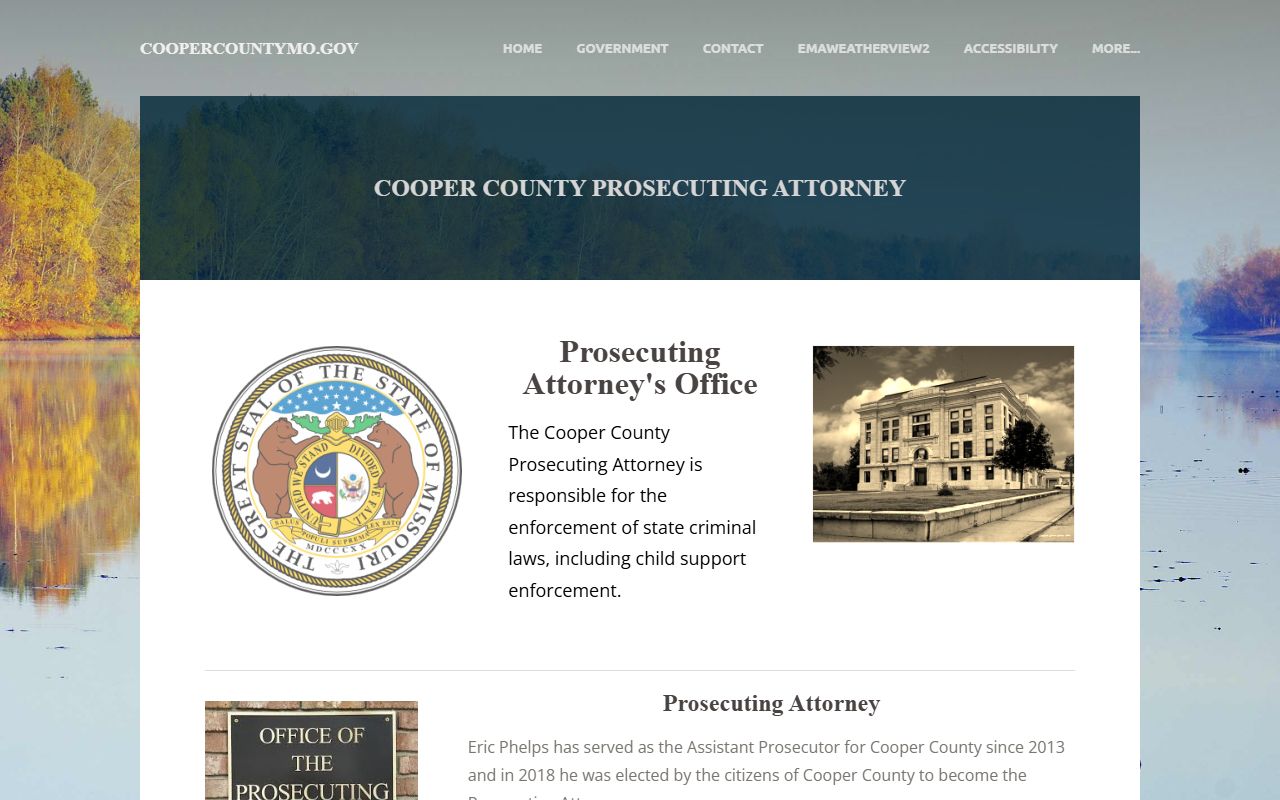
The prosecutor source helps explain why the criminal court record starts with filed charges, but certified copies still come through the court office.
For indigent defense, the Missouri State Public Defender office locator tells users to select the county where charges were filed. The offices and contacts page lists Jefferson City District 19 for Cooper County-related service, with District Defender Rebecca Charles. Public Defender instructions also route users to Case.net for court dates and Track This Case alerts.
Public Access to Cooper Criminal Records
Missouri public access rules apply to Cooper County criminal court records, but court files are governed by court-access rules as well as open-record principles. RSMo 610.011 states Missouri's public policy for open government records. Missouri Court Operating Rule 2 addresses public access to judicial records. Those two sources help explain why Case.net may show public docket information while sealed documents, confidential material, or redacted data remain unavailable.
Arrest reports and incident reports are separate from criminal court records. RSMo 610.100 says arrest and incident reports are generally open, while investigative reports may be closed while an investigation is active. That distinction matters when a person wants police narrative material rather than the filed criminal case. For the case file, start with Case.net and the Circuit Clerk. For sheriff reports, use the Sheriff's Office or arresting police department.
The arrest-record expungement image from RSMo 610.122 connects to criminal court records because an arrest can feed a court case, but Missouri law treats arrest expungement and conviction expungement as different questions.
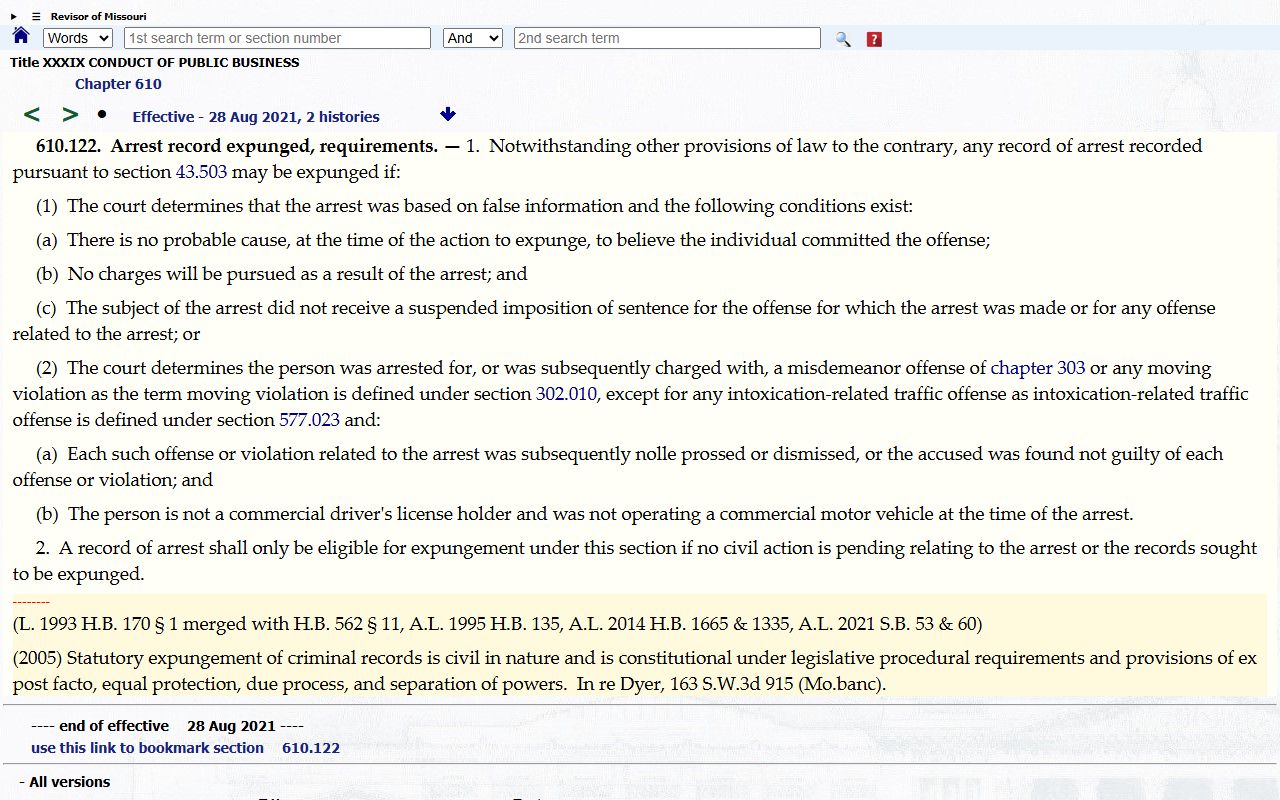
A Cooper County criminal case may need both court-file review and agency-record review when the request involves arrest history and final court outcome.
Sealed vs Expunged Records
Sealed and expunged records are both restricted, but they are not identical. A sealed criminal record is hidden from ordinary public access by law or court order. An expunged record is closed through a statutory process that can remove qualifying arrest, charge, or conviction information from ordinary public searches. Missouri expungement does not always erase every internal government use, and some agency, licensing, or employment exceptions may remain.
| Sealed | Expunged | |
|---|---|---|
| Public Visibility | Not shown to the general public through ordinary access. | Closed from ordinary public access after the court grants qualifying relief. |
| How It Happens | By statute, confidentiality rule, or court order. | By petition under a Missouri expungement statute when eligibility is met. |
| Examples | Juvenile, adoption, protected-address, mental-health, or specific sealed criminal material. | Qualifying criminal convictions under RSMo 610.140 or arrest records under RSMo 610.122. |
| Access Afterward | May require party status, statute, court order, or legitimate-interest finding. | May remain available to certain agencies or for exceptions set by law. |
Read Dispositions and Sentences
The disposition is the outcome. In Cooper County criminal court records, read the disposition for each count, not just the case header. One count can be guilty, another dismissed, and another amended. A sentence can include jail, prison, probation, treatment, fines, costs, restitution, or suspended execution of sentence terms. A warrant entry or bond entry is not the same as a final sentence.
- Disposition
- The final result for a charge or case.
- Nolle prosequi
- A prosecutor's decision to decline or dismiss a charge.
- Probation
- A supervised sentence served in the community under court terms.
- Restitution
- Money the court orders paid to a victim.
- Capias or bench warrant
- A warrant issued after failure to appear or obey a court order.
The federal prosecution images from the U.S. Attorney for the Western District of Missouri and its contact page help distinguish state Cooper County criminal court records from federal criminal matters.
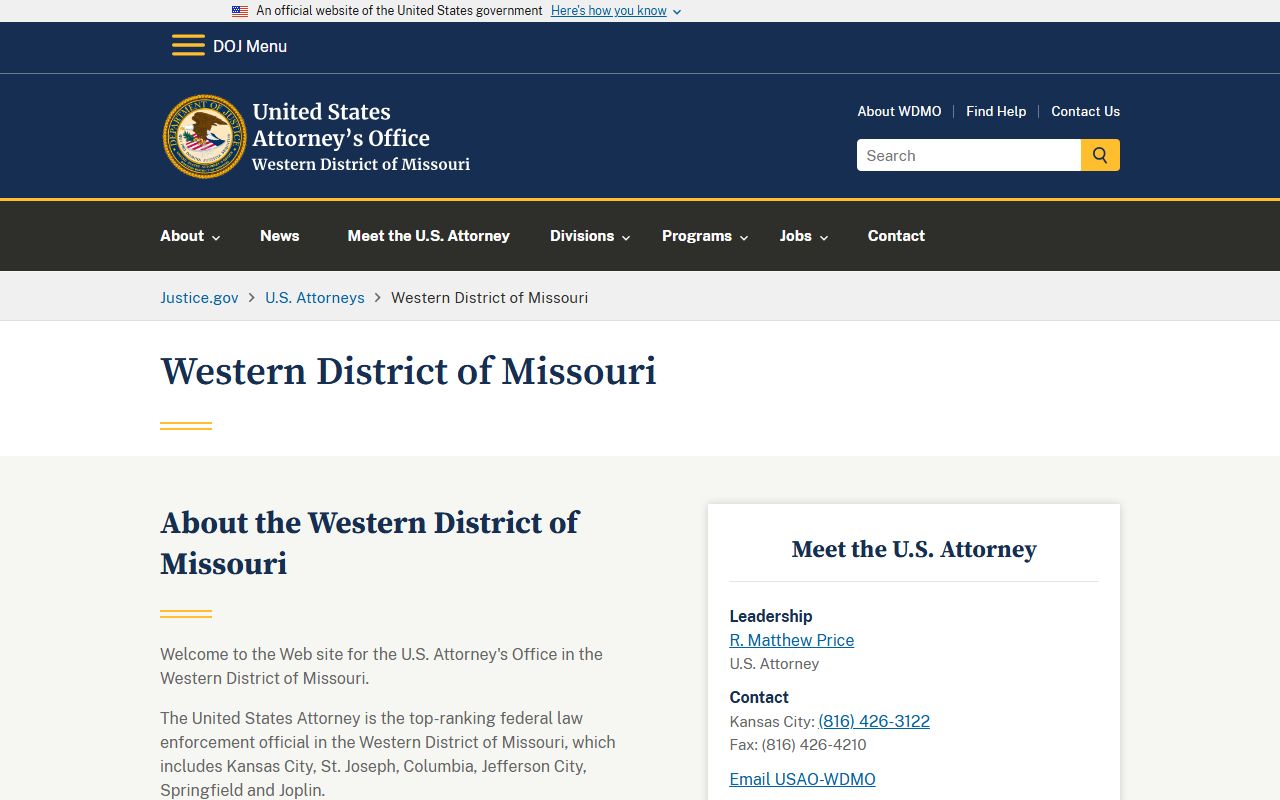
Federal cases do not become Cooper County Circuit Court files just because the defendant lives in the county or the event occurred nearby.
The U.S. Attorney Western District contact page is the separate federal contact source for criminal prosecutions outside the Cooper County Circuit Court file.
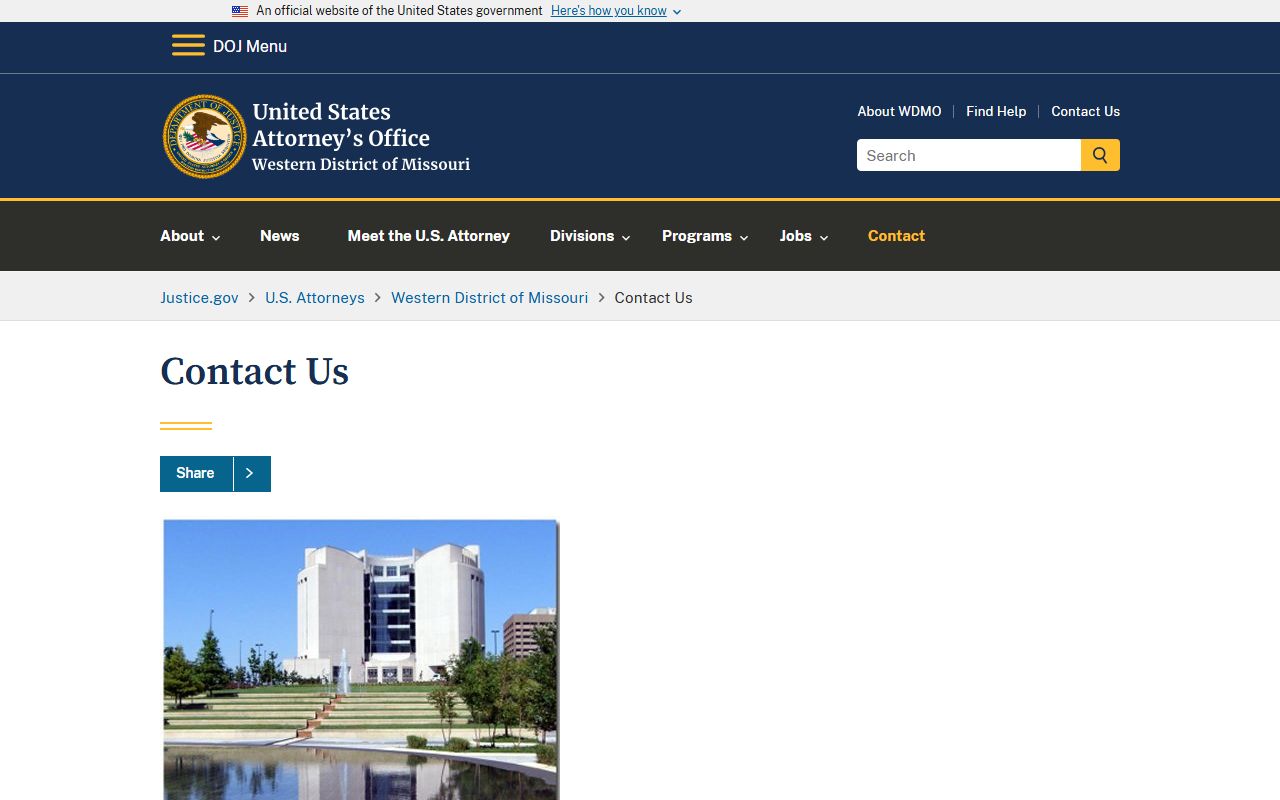
Use federal court and U.S. Attorney contacts for federal prosecutions; use Case.net and the Cooper County Circuit Clerk for state criminal court records.
Restricted Cooper Criminal Court Records
Restricted Cooper County criminal court records include juvenile matters, sealed warrants, sealed criminal filings, expunged records, protected addresses, confidential victim information, medical or mental-health information, and documents with personal identifiers. Missouri juvenile law can keep reports, evaluations, social-history material, Children's Division records, home studies, and police reports confidential even when a limited court event is visible.
If a criminal record is missing from Case.net, do not assume it never existed. It may be confidential, sealed, expunged, not entered for remote public access, older than the online record, or filed in a different court. Call the Cooper County Circuit Clerk at 660-882-2232 with the case number, party name, filing year, and case type. Court staff can explain access procedures and copy channels, but they cannot give legal advice or decide strategy for an active case.